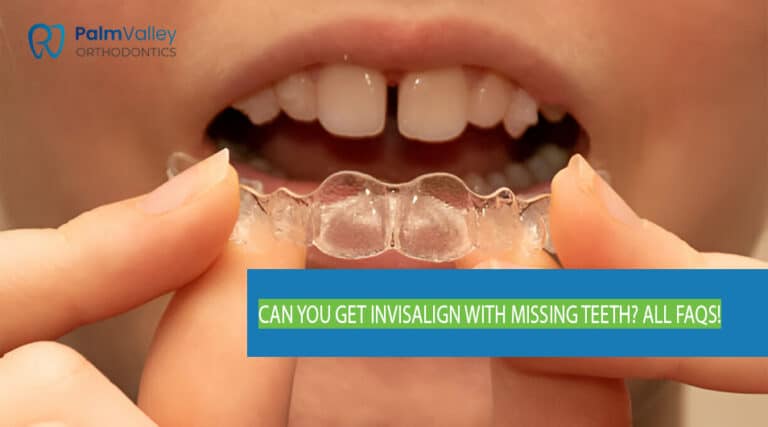
How Long Does Invisalign Take to Close a Gap? [+Teeth Gap Reasons]
Invisalign can fix a tooth gap in as little as 6 weeks or up to 12 months. However, it is usually determined by the size and reason of the gap.

Still, we get it, having a visible gap in your smile can make you feel self-conscious, hesitant to laugh freely, or even avoid photos. And if you have been told that metal braces are the only way to fix it, you are likely searching for something less noticeable and more comfortable.
Invisalign is a modern, clear alternative that’s proven to close gaps without drawing unwanted attention.
What Are Teeth Gaps?
Spaces between two or more teeth are called diastema, or tooth gaps. The space between the two upper front teeth is the most typical.
Common Reasons for Dental Gaps:
1- Genetics
Your teeth may occasionally be smaller by nature than your jaw. More space is created as a result, particularly between your front teeth. If your parents had gaps, you may also have them because they run in families.
2- Missing Teeth
You could be born without a tooth (a condition called congenitally missing teeth), or lose one due to injury or decay. When that happens, the nearby teeth may shift out of place, leaving noticeable gaps.
3- Habits
Thumb-sucking and tongue thrusting, which involves pressing your tongue on your front teeth when speaking or swallowing, are examples of juvenile behaviors that can put pressure on your teeth and gradually cause them to separate.
4- Gum Disease
The bone that supports your teeth is harmed when gum disease gets severe. Particularly in adults, this can lead to teeth shifting and becoming loose, which results in gaps.
5- Tooth Extraction
Sometimes, dentists remove a tooth to help align your bite better. While that’s part of the plan, the gap left behind can take time to close if not properly managed with aligners or braces.
Can Invisalign Close Teeth Gaps?
Yes, It Can, and Quite Effectively
With Invisalign, your teeth are gradually moved using clear aligners. Every one to two weeks, you put on a fresh pair of aligners.These aligners are custom-made to bring your teeth closer together, closing the gap gradually.
Invisalign is just as effective as metal braces for the majority of people with mild to moderate spacing. It also works well in managing overbite.
How Long Does It Take Invisalign to Close a 1mm Gap?
Small Gaps Close Fast
If your gap is 1mm or less, Invisalign can close it in as little as 6 to 10 weeks, provided you wear your aligners for 20 to 22 hours daily.
At our Palm Valley Orthodontics office, we saw a 25-year-old patient with a 1mm front teeth gap and helped her with complete closure in just under 2 months with proper Invisalign use.
How Long Does Invisalign Take for Larger Gaps?
Moderate Gaps (2–3mm)
These usually take 3 to 6 months to close, depending on how your teeth respond to movement.
Bigger Gaps (4mm and above)
Larger gaps may take 6 months to a year or more, especially if there are multiple gaps or jaw alignment issues involved.
Invisalign Gaps Before and After: What Results to Expect?
Within the first two to three months, the majority of patients observe a noticeable improvement in their smile. Before treatment even starts, you’ll get digital progress scans and a 3D preview of your finished smile.
According to Invisalign’s clinical studies, over 90% of mild-to-moderate spacing cases show complete correction with Invisalign within 6–12 months.
Can Invisalign Close Gaps from Missing Teeth?
Yes, But It Depends on Your Case
Invisalign can help bridge the gap left by missing teeth if you desire to move neighboring teeth into it.
However, Invisalign can be used to keep the area open and prepare for a bridge or implant if you plan to have one. Based on your future dental goals, your orthodontist will advise you on the best course of action.
How Much Does Invisalign for Gap Teeth Cost?
Average Cost in the U.S.
Invisalign treatment generally costs $3,000 to $7,000.The ultimate cost is determined by:
- The extent of the gap
- How many aligners are required?
- The duration of your treatment
- If you are eligible for Invisalign Express (for small gaps),
- Your coverage under dental insurance
Many insurance plans cover Invisalign like they do braces. Ask your provider to check your benefits.
Invisalign vs Braces for Closing Gaps
| Feature | Invisalign | Traditional Braces |
| Appearance | Clear, invisible | Metal brackets |
| Comfort | Smooth, no wires | Can cause mouth sores |
| Removability | Removable | Fixed in place |
| Best For | Mild-moderate gaps | All gap sizes |
| Speed | Similar timelines | Slightly faster in complex cases |
| Price Range | $3k–$7k | $2k–$6k |
A Summary of it all.
- 1mm–2mm gaps: About 1–3 months
- 3mm–5mm gaps: Around 6–12 months
- Extraction gaps: Can take up to 24 months in complex cases
So, for very large gaps or jaw issues, braces may work a bit faster, but Invisalign is still a strong option for most cases.
Why Do Some Gaps Remain After Invisalign?
There are a few reasons why gaps may not fully close:
- Not wearing aligners as recommended
- Teeth not responding as expected
- Skipping or delaying retainer use
- Needing refinement aligners at the end
Your provider may offer refinements, which are extra sets of aligners to fine-tune your results.
Final Thoughts
If you are worried about the gap in your teeth, whether it’s small or wide, Invisalign is a strong, safe, and discreet solution. The treatment is customizable, clear, and effective for closing gaps of all sizes. While small gaps can close in just a few weeks, larger cases may take longer, depending on complexity.
Talk to a orthodontist at Palm Valley Orthodontics to get a personal evaluation. They will scan your teeth and give you a timeline based on your exact needs.
To learn how quickly and permanently your gap can be closed, schedule your Invisalign consultation today.
People Also Ask
How long does Invisalign take to close a gap?
For small gaps (1–2mm), it can take 6 to 12 weeks. Larger gaps may require 6 to 12 months.
Is Invisalign good at closing gaps?
Yes. Invisalign is effective for closing mild to moderate gaps and offers a more comfortable and discreet option compared to braces.
Can Invisalign close gaps from missing teeth?
It depends. Invisalign is a more discreet and comfortable alternative to braces for reducing mild to moderate gaps.
Why do I still have a gap in my teeth after Invisalign?
You might need refinements or may have skipped wearing your retainers. Small gaps can reopen if retainers aren’t worn after treatment.